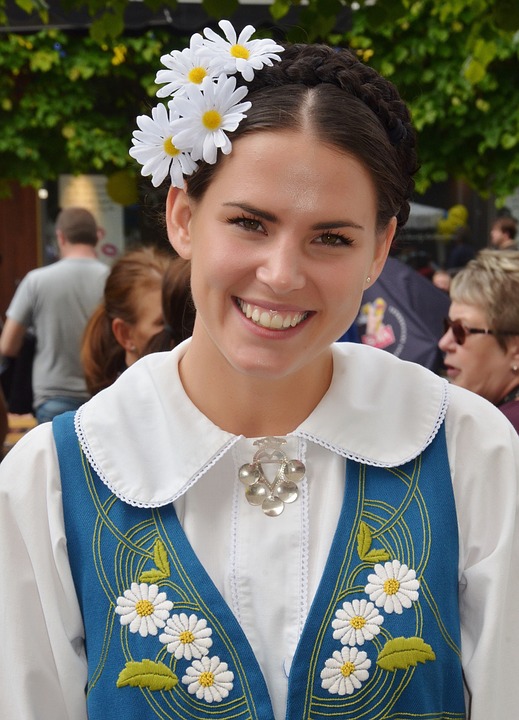
The text outlines The Family History Guide's foundational strategy for conducting genealogical research in Sweden. The guide emphasizes that because Sweden heavily utilized patronymic naming systems, traditional name searches are highly unreliable. Instead, successful research relies entirely on pinning down exact locations and tracking families through unique localized records down to the individual house level.
The Parish and Patronymic Naming Challenge
• The Location Priority: Because many individuals shared identical names, matching ancestors requires precise geographic tracking. Vital documents are completely organized by individual church parish boundaries.
• The Patronymic Obstacle: Patronymic naming practices (where children take their father's first name as their last name, changing names every generation) make standard database index searches difficult to verify.
Core Records: The Church of Sweden
• Historical Baseline: The Evangelical Lutheran Church of Sweden separated from the Roman Catholic Church in 1527. It managed the country's primary vital registries until it officially separated from the state in 2000.
• The 1686 Church Law: Uniform record-keeping was mandated under a landmark 1686 church law (effective in 1688), though some parish accounting logs survive from medieval times.
• Parish Registers (Församlingsböcker): These comprehensive journals document exact family units within a parish, tracking birth, baptism, marriage, and death dates alongside personal relationships and occupations.
The Indispensable Household Examination Books
To ensure you have identified the correct family lineage, researchers must utilize Household Examination Records. Kept by local ministers, these highly detailed books continuously tracked households and can contain:
• Names of all family members, including pigor (female workers) and drängar (male workers).
• The specific name of the farm, village, or rote (local registration area).
• Personal metrics, including birthplaces, calculated ages, and smallpox vaccination statuses.
• Local tracking notes, such as moving dates, disciplinary actions, military conscription references, and catechism knowledge scores.
Primary Archival Repositories
• Riksarkivet: The National Archives of Sweden provides an extensive, free digital database of original church books, though the interface is primarily in Swedish.
• ArkivDigital: Offers the most comprehensive, high-quality collection of digitized Swedish church and historical records.
• Global Databases: Major indexed collections are hosted on FamilySearch.org, Ancestry.com, and MyHeritage.com, with localized breakdown strategies available on the FamilySearch Research Wiki.
• Overcoming Dead Ends: Because of dense regional population links, DNA testing is highly recommended to break past genealogical brick walls. Researchers should also expect to use language tutorials to decode older distinct handwriting styles.
* Good: Using the articles and videos in this Choice, write down key learnings for research resources. Then use the learnings for searches for an ancestor.
* Proficient: Same as above, for two or more ancestors.
* Good: Using the articles and videos in this Choice, write down key learnings for language resources. Then use the learnings for searches for an ancestor.
* Proficient: Same as above, for two or more ancestors.


 FS—Wiki: Sweden Genealogy
 AC—Beginning Swedish Research—35:45 - 2014

 Forebears.io site for research records.